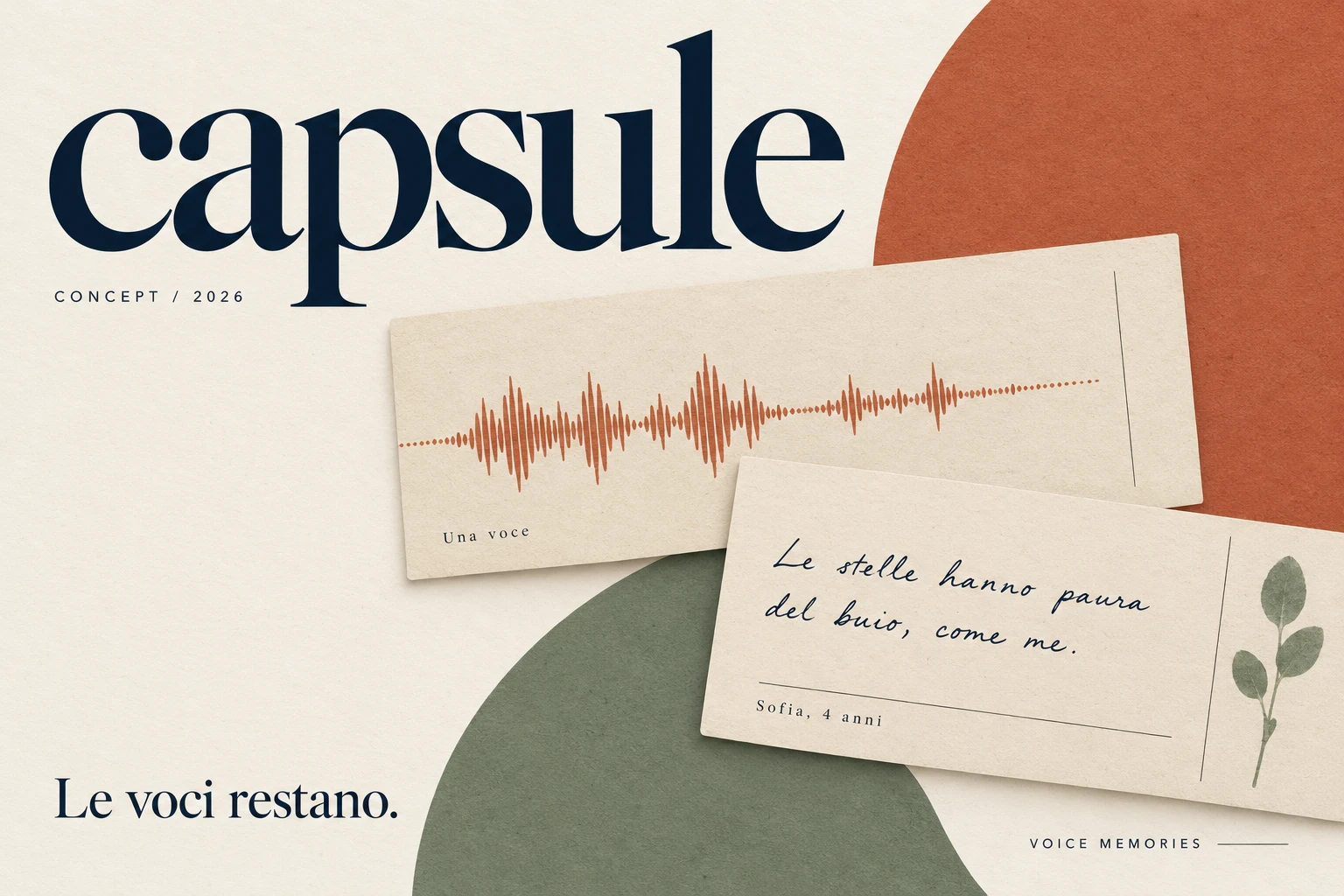
A concept for preserving the voices and memories of loved ones, turning short recordings into memories to revisit over time. The project explores the value proposition, audiences, business model and a validation plan. A childhood-focused demo makes one initial direction tangible.
Capsule — visual concept for the project.
THE PRODUCT QUESTION
How can the wish to preserve a voice become a useful proposition today, with value that lasts over time?
INSIDE THE PROCESS
The product decisions. The reasoning behind them.
01
Two needs, a proposition to refine
THE CHOICE
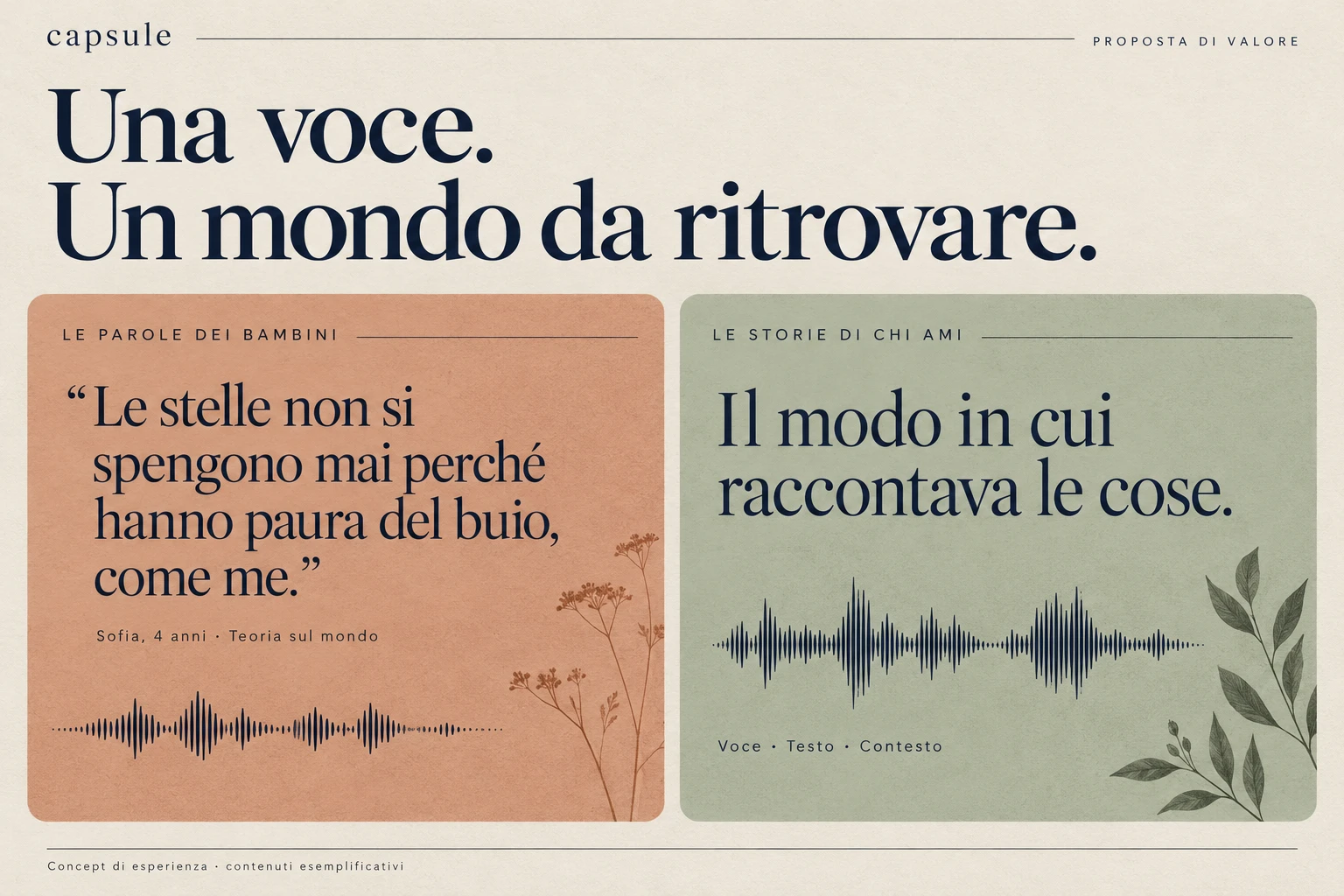
The concept considers two contexts: the words of children aged 3–6 and the stories of parents and grandparents. The Little Voice demo explores the first journey.
THE REASONING
The shared need is to preserve a voice. Usage occasions, motivations and expectations differ: separating the segments helps clarify where to start and which promise to test.
Customer segmentation · Value proposition · Prioritisation
02
Reduce the effort, make the value tangible
THE CHOICE
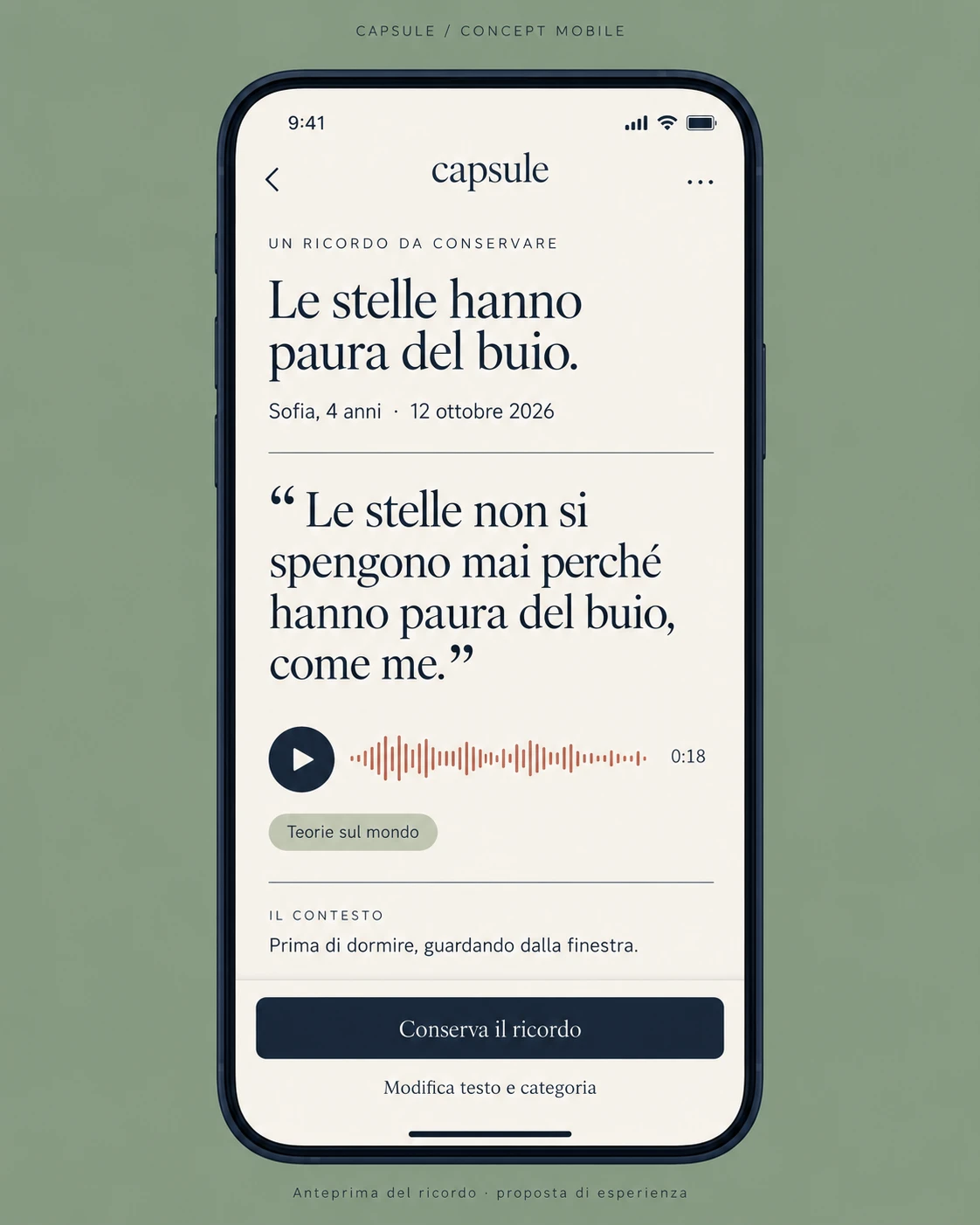
A short recording becomes a memory card with voice, text and context. The cards form a capsule to revisit over time.
THE REASONING
The proposition starts with a simple everyday action. The value to test is its ability to bring back a meaningful memory, alongside the sustainability of a recording habit.
Experience strategy · Value framing · Journey design
03
Connect the promise to the business model
THE CHOICE
The deck explores a subscription and potential extensions, such as printed collections and personalised podcasts. These are model hypotheses to assess alongside the need.
THE REASONING
A promise spanning years requires trust, data control and service continuity. Willingness to pay, storage costs and economic sustainability need testing before expanding the offer.
Business model · Monetisation strategy · Trade-off
04
Separate desirability, feasibility and willingness to pay
THE CHOICE
The plan proposes three tests: interest and actual use, the quality of AI processing, and purchase intent. Each test includes Go/No-Go criteria.
THE REASONING
A demo makes the idea understandable. Separate evidence is then needed to establish whether people actually record, value the selected memories and would pay to preserve them.
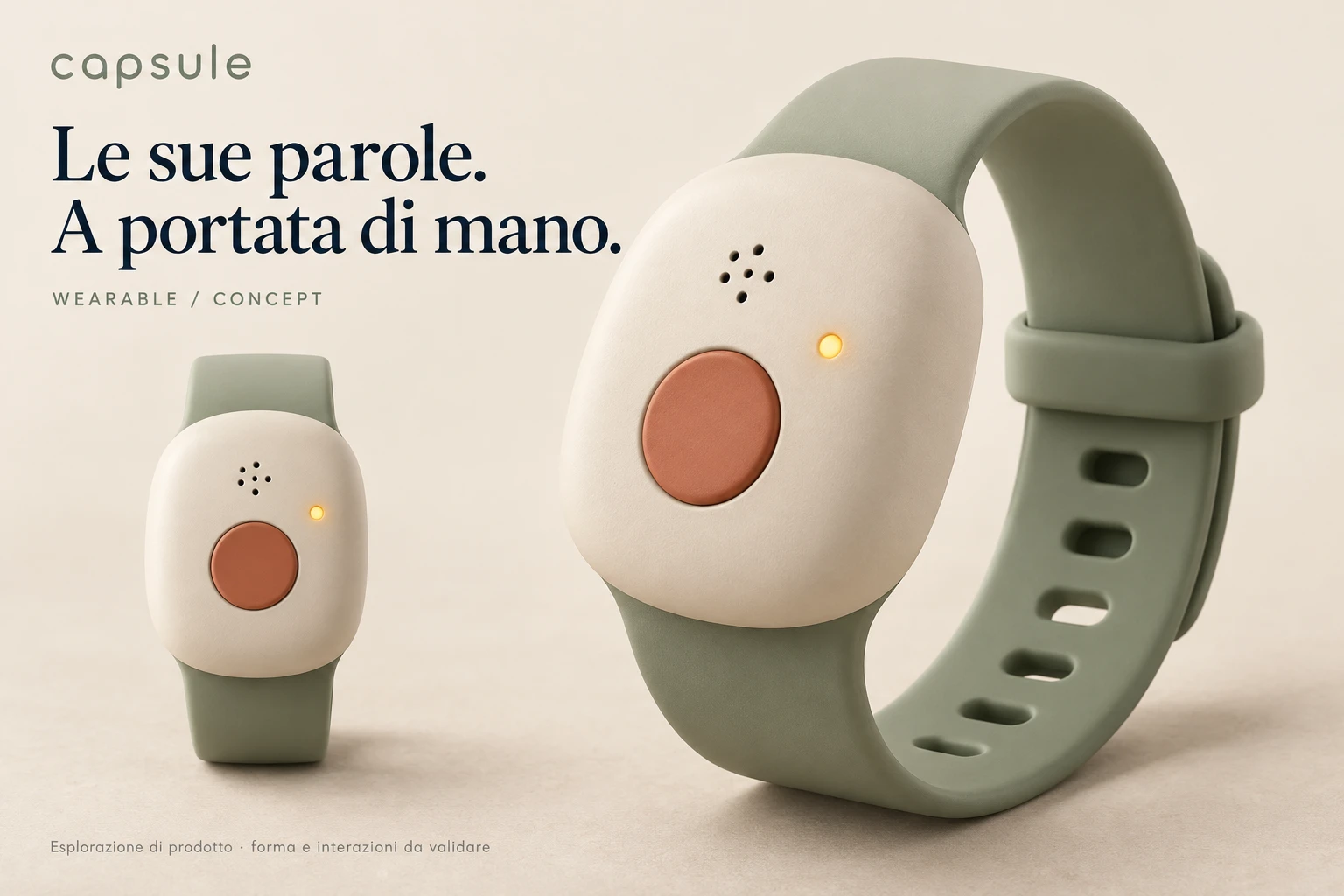
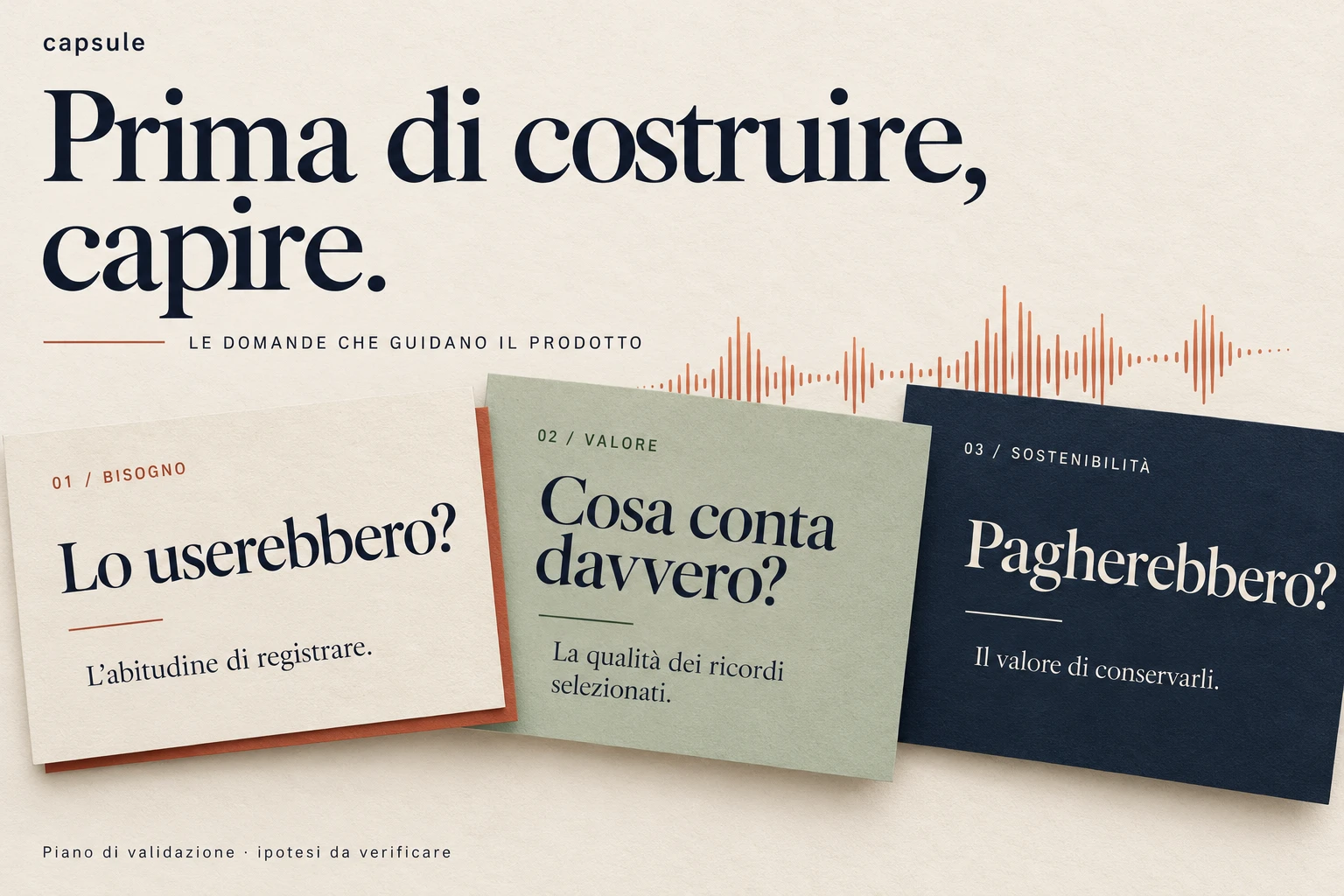
Four concept visuals: value for people, a mobile preview, a possible wearable extension and the questions guiding validation. Content is illustrative and does not represent a released product or achieved outcomes.
The proposition. Two use cases, one platform: preserving children’s words and the stories of loved ones.The mobile experience. Listen again, edit and save: the person stays in control of the memory. Concept mockup with example content.A possible evolution: the wearable. A wrist-worn voice recorder to start recording with a single action and a visible indicator. A potential extension of the experience: form, interactions, feasibility and suitability for children still need validation.The validation plan. Need, perceived quality and willingness to pay: questions to answer with evidence before investing.
AI IN THE VALUE PROPOSITION
Exploring possibilities. Choosing a direction.
In the concept, AI transcribes recordings, identifies themes and highlights potentially meaningful moments. The product question is which selection people find valuable. Perceived quality, errors, consent and control over memories still need testing: the demo does not establish the system’s reliability.
WHAT I TAKE FORWARD
The product makes decisions visible.
The strength of the proposition depends on making future value understandable in the present. A memory archive needs to offer a reason to start today and an experience simple enough to repeat.